Tag Archives: the gay men project

Tyler, Acrobat/Circus Teacher, Vashon Island, Washington

photo by Kevin Truong

photo by Kevin Truong

photo by Kevin Truong

photo by Kevin Truong

photo by Kevin Truong

photo by Kevin Truong

photo by Kevin Truong

photo by Kevin Truong

photo by Kevin T ruong

photo by Kevin T ruong

photo by Kevin Truong

photo by Kevin Truong

photo by Kevin Truong

photo by Kevin Truong

photo by Kevin Truong

photo by Kevin Truong

photo by Kevin Truong

photo by Kevin Truong

photo by Kevin Truong

photo by Kevin Truong

photo by Kevin Truong

photo by Kevin Truong

Tyler, in his own words: “Being gay has meant very different things to me in different stages of life. When I was young it meant deep shame and pain–I thought my attraction to guys was a curse. It meant feeling different. Being gay meant severing my sexuality and desire in ways that later took years of undoing. It meant many years of hiding a very basic human part of me.

Now, after numerous years and a lot of good (and hard) therapy, I can wholeheartedly say that it is a gift (that said, I don’t always feel it is easy). Being gay–being different–is an opportunity to expand humankind’s imagination of desire and of what love can be and do. This truly is Good news. For me, being gay has been an invitation to take a deep and difficult look into my own life and story, and I feel grateful for that.

My coming out was a slow process. Although I didn’t have language or even a context for what being gay was when I was young, I was aware of my difference quite early on. When I was 19 years old I called my immediate family together and told them that I was attracted to men. The home and environment that I grew up in was a very conservative Christian one and so at that time in my life I was very much not okay with the idea of being gay. I told them that I was never going to date a guy and that I wasn’t relationally attracted to men, which at the time I entirely believed myself.

After college I began to realize that I really needed to address my sexuality and I began to wonder if sexuality was indeed a gift from God–even for me–as I had been told it was for everyone else growing up.
I began dating men when I was 25, and it wasn’t until 28 that I officially came out to myself and to my parents.

I think the biggest challenge and greatest success are one in the same–the process (and ever-ongoing process of) accepting the many and interconnected parts of myself. The work of undoing; taking down the walls of the closet that I built around myself to protect me from a world that could not bless my difference.

I’ve often wondered about what advice I’d give to my younger self, and whether I’d be receptive to it or not….but I think I would say, “Be kind to yourself, Tydo.”

A Note from Ali, in Pakistan…

Ali, in his own words: “For me being Gay is not just a word that explains my sexual orientation. For me it’s an inner voice that has helped me to do things I wouldn’t have done if I weren’t gay. The sacrifices I made, the battles I fought and the love and compassion I could give to others was only because I am a homosexual. I believe all homosexuals are sensitive, creative, and loving. Most people might not agree with me, but it’s okay.

Born and bred in a Muslim middle class family in Lahore, Pakistan, I am the eldest son. In my country the eldest son is supposed to follow the legacy of his father to set an example for the younger brothers. The idea of an effeminate, unconfident and confused boy as an eldest son or brother wasn’t acceptable for my father or brothers so, eventually I was put on the shelf as an embarrassment for the family. I was bullied in school and in my house and all I could do was to shut myself up and cry or to plan a suicide. I didn’t have guts to do the latter anyway.

After graduation, my father died and I started doing a job to support my family. Not to mention my job was not any different; I was bullied there as well. That was the time I realized that I should look for people like me with whom I could be myself. So thanks to internet I found ways to communicate with other gays in my city. I finally found out that I wasn’t alone and there were other people like me who have gone through the same torture.

Being gay in Pakistan is not easy. In public, in family even with friends one has to act straight otherwise one could face anything from public harassment, social boycott to even death. There are many gays living in big cities but they all try to be as much invisible as possible. Most guys are married, have kids but they also have random sex with guys to satisfy their real self. Rich gays arrange secret parties in their farm houses and somehow manage to live the life they want but gays from humble backgrounds always live is fear of getting caught all the time. Every kind of gay social networking is blocked and people rely only on Facebook and Grindr. But it’s not safe as well because you never know there might be a religious fanatic on the other end waiting to kill you to get a ticket to heaven.

So I have changed myself with the passage of time. Now 32 I have this rugged look (thanks to my favorite porn star). I am more straight acting (lol). I am trying my best to survive in this homophobic society. I even managed to have a relationship for 10 years. He was the love of my life. We couldn’t meet regularly due to fear of getting caught so we used to go out of city for some quality time every two to three months (just like Brokeback Mountain). But then after 10 years he remembered that he was straight, so he got married. I don’t blame him, he just couldn’t handle the pressure. My family still thinks that I am a loser despite the fact that I am still supporting them. They want me to get married. But I just can’t live a lie just to be politically correct. I read somewhere it’s better to be hated for what you are than to be loved for what you are not. Sometimes I get lonely, I feel suffocated and sad but then I start afresh. Sometimes I come across young guys in their early teens or twenties scared and confused as I was. I talk to them and try my best to let them understand that it’s okay to be different, it’s okay to be gay!”

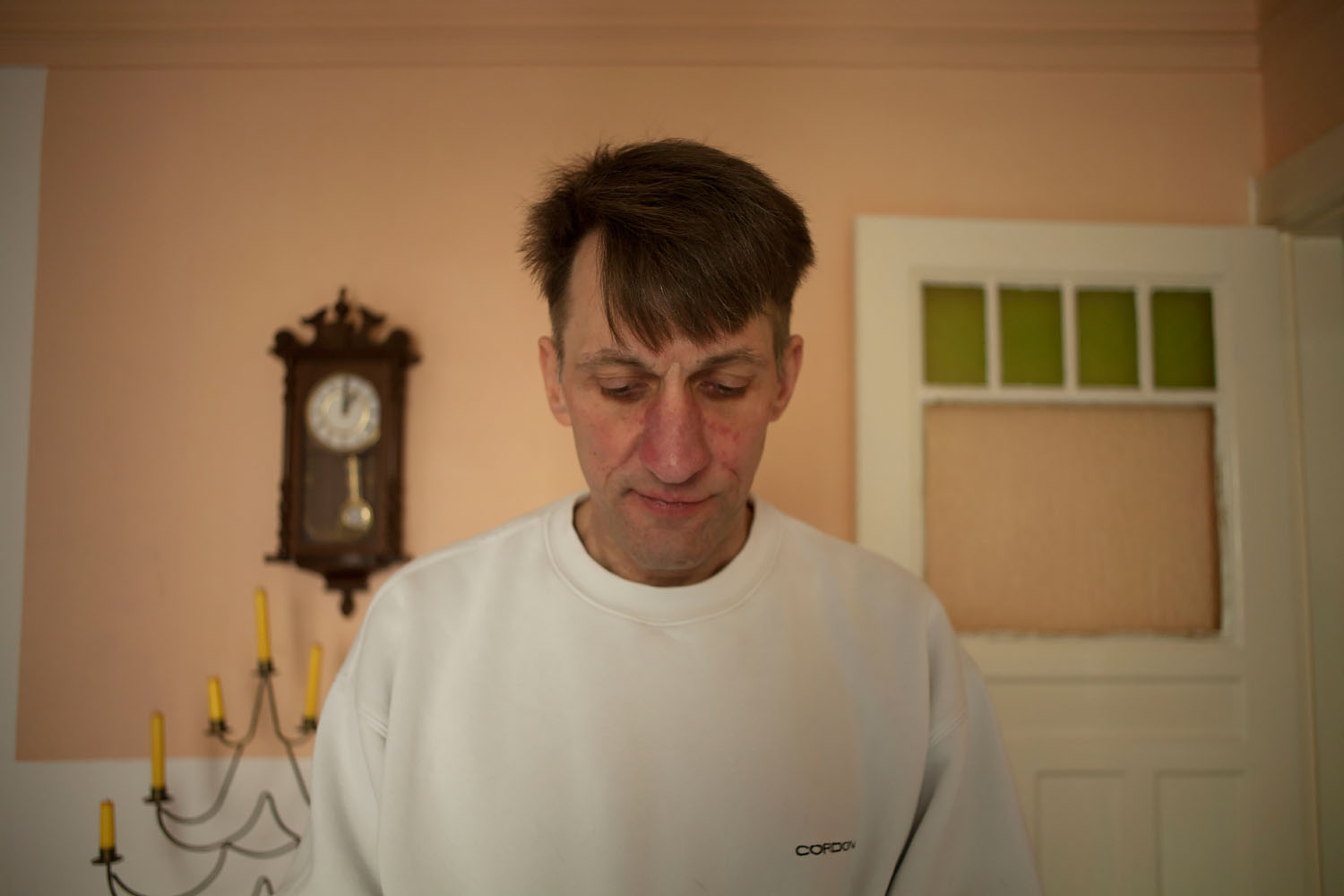
Peter, Caretaker, Hamburg, Germany

photo by Kevin Truong

photo by Kevin Truong

photo by Kevin Truong

photo by Kevin Truong

photo by Kevin Truong

photo by Kevin Truong

photo by Kevin Truong

photo by Kevin Truong

photo by Kevin Truong

photo by Kevin Truong

photo by Kevin Truong

photo by Kevin Truong

photo by Kevin Truong

photo by Kevin Truong

photo by Kevin Truong

photo by Kevin Truong

photo by Kevin Truong

photo by Kevin Truong

photo by Kevin Truong

photo by Kevin Truong

Peter, in his own words:“Was bedeutet es für dich, schwul zu sein? Für mich ist es eine Normalität einen Menschen zu mögen und zu lieben, wie zum Beispiel Heteros. Es ist für mich ein schönes Gefühl.

Welche Herausforderungen hattest du damit im Leben? In einem kleinen Dorf damit nicht akzeptiert zu werden, sogar verachtet zu werden. Im Job waren keine Probleme.

Mein Coming-out begann mit ca. 14 Jahren im Dorf, wo es nur heimlich gelebt werden konnte. Im Jahr 1985 habe ich das ComingOut in Hamburg erlebt und ausgelebt. Hamburg war als Großstadt damals toleranter.

Die Community, diese ist hier gut ausgeprägt, aber ich denke heutzutage ist die Toleranz für diese Community wieder auf einem absteigenden Ast. Schwul sein kann man nur in Großstädten wie Hamburg und auch da nur in bedingtem Rahmen ausleben. Es werden nach wie vor Grenzen aufgezeigt. Also eine vollkommene Toleranz gibt es nicht.

Tipp an mein jüngeres Ich, lebe so wie du fühlst und möchtest, aber sei nicht zu offen und halte gewisse Grenzen bei, dann lebst du da gut mit.”

In English:

“For me (being gay) is a normality to like and to love, such as is the case with straight people. It’s a great feeling for me.

(With regards to challenges) being in a small village and not being accepted, even despised. With regards to work I have had no problems.

My coming-out began about 14-years-old in the village, where I had to live in secret. In 1985, I experienced and lived out in Hamburg. Hamburg back then was a more tolerant big city.

The community is well developed here, but I think today the tolerance for the gay community is again starting to decrease. You can live openly gay only in big cities like Hamburg and even then only within a limited scope. There are still limits. So there is not a perfect tolerance.

Tip to my younger self, live like you feel and want, but do not be too open and keep certain limits, then you will live well.”